
Blog · · By Dhrumil Barot, Founder
OpenClaw Models: 10 Best, Ranked by Cost per Task
The best OpenClaw models are Claude Sonnet 5.5 and GPT-6.1 Sol at $0.23 per cached 12-step task. Ten models, official prices, config lines.
TL;DR: For most OpenClaw agents, Claude Sonnet 5.5 or GPT-6.1 Sol is the best default at $0.23 per cached 12-step task. GPT-6.1 Terra halves that to $0.12, and DeepSeek V4 Flash, Claude Haiku 5.5 and GPT-6 Luna run the same task for about $0.013. Prices verified 2026-11-07 on each provider's own pricing page.
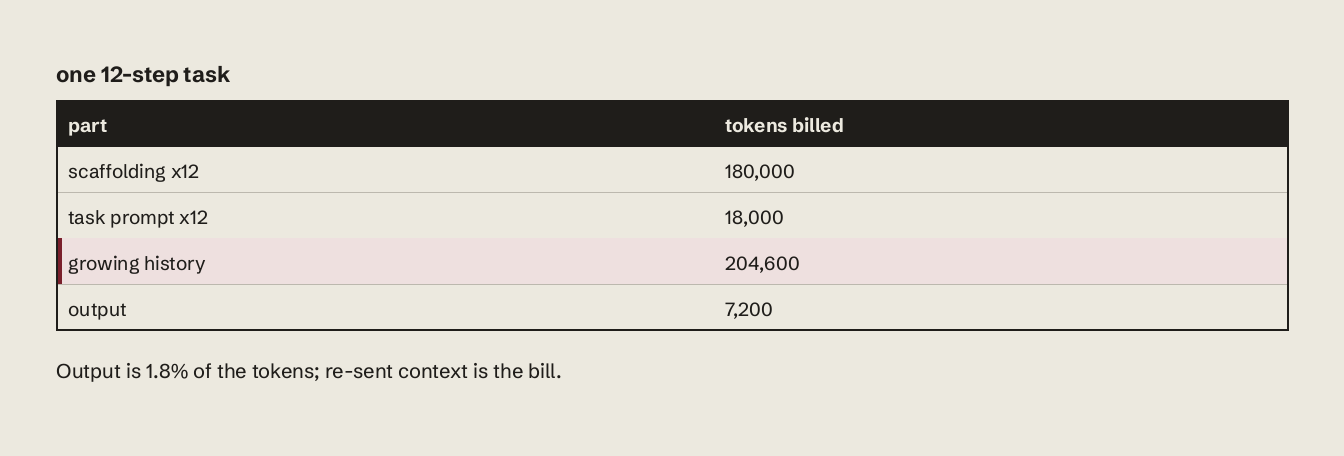
The best OpenClaw models today are Claude Sonnet 5.5 (anthropic/claude-sonnet-5-5) and GPT-6.1 Sol (openai/gpt-6.1-sol) for daily agent work, Claude Opus 5.5 for the hardest coding, and GPT-6.1 Terra, Gemini 3.8 Flash or DeepSeek V4 Flash when cost matters more than the last few points of quality. You change the OpenClaw model with one command, openclaw models set <provider/model>, or one config key, agents.defaults.model.primary. Price per token is the wrong way to compare them: an OpenClaw agent re-sends its whole context on every step, so one 12-step task bills about 402,600 input tokens for 7,200 output tokens. We priced that exact task on all ten OpenClaw models below, with and without prompt caching.
How we judged the OpenClaw models
We ranked each model by what it costs to finish one agent task, then by what it is good at. The other pages on this results page list models by vibe or by tier. None of them price a task.
The workload is the same one we built in where the tokens go in a 12-step agent run: one bug fix or small automation, 12 model calls.
| Assumption | Value | Why |
|---|---|---|
| Scaffolding per call | 15,000 tokens | system prompt, skills, tool schemas, re-sent every step |
| Task prompt | 1,500 tokens | your message |
| History added per step | 3,100 tokens | last tool result (2,500) + last reply (600) |
| Output per step | 600 tokens | reasoning summary + tool call |
| Steps | 12 | one task |
| Total billed | 402,600 in, 7,200 out | sum over 12 calls |
"Cached" assumes the provider's prompt caching works as designed: each step writes only its new 3,100 tokens and reads the rest (352,000 tokens) from cache. Cache writes are billed at each provider's write rate. Real OpenClaw sessions vary a lot; coding agent token use swings 30x between similar tasks, so treat these as a ruler, not a forecast.
OpenClaw models compared: summary table
All ten models, cost per task and per 1,000 tasks. Prices are standard tier, per 1M tokens, captured 2026-11-07.
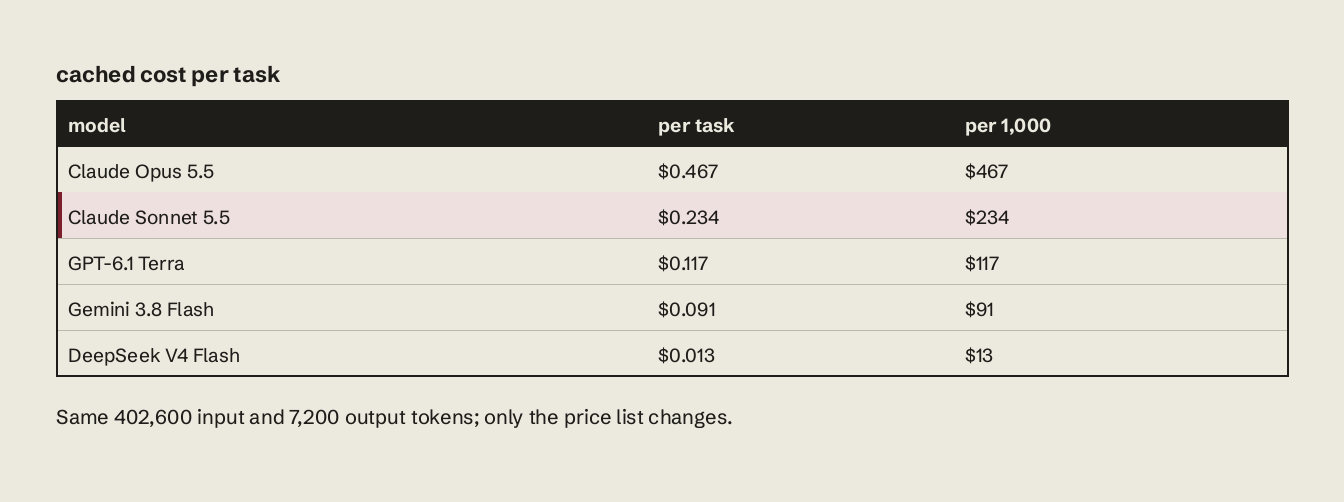
| # | Model (OpenClaw ref) | Input / output per 1M | Uncached per task | Cached per task | Cached per 1,000 tasks |
|---|---|---|---|---|---|
| 1 | Claude Sonnet 5.5 (anthropic/claude-sonnet-5-5) | $2 / $10 | $0.877 | $0.234 | $234 |
| 2 | GPT-6.1 Sol (openai/gpt-6.1-sol) | $2 / $10 | $0.877 | $0.234 | $234 |
| 3 | GPT-6.1 Terra (openai/gpt-6.1-terra) | $1 / $5 | $0.439 | $0.117 | $117 |
| 4 | Gemini 3.8 Flash (google/gemini-3.8-flash) | $0.75 / $3.75 | $0.329 | $0.091 | $91 |
| 5 | DeepSeek V4 Flash (deepseek/deepseek-v4-flash) | $0.15 / $0.60 off-peak | $0.065 | $0.013 | $13 |
| 6 | Claude Opus 5.5 (anthropic/claude-opus-5-5) | $4 / $20 | $1.754 | $0.467 | $467 |
| 7 | Gemini 4 Argon (google/gemini-4-argon) | $2 / $10 to Nov 30 | $0.877 | $0.208 | $208 |
| 8 | Claude Haiku 5.5 (anthropic/claude-haiku-5-5) | $0.10 / $0.50 | $0.044 | $0.013 | $13 |
| 9 | GPT-6 Luna (openai/gpt-6-luna) | $0.10 / $0.50 | $0.044 | $0.013 | $13 |
| 10 | Local model via Ollama (ollama/<model>) | $0 | $0 | $0 | hardware and power |
Run your own token counts through the LLM cost calculator if your agent's scaffolding is bigger or smaller than 15,000 tokens; the ranking holds, the absolute numbers move.
1. Claude Sonnet 5.5
Claude Sonnet 5.5 is the best default model for OpenClaw when you want one model that handles chat, files and multi-step tool use without babysitting.
- Best for: daily assistant work, messaging channels, multi-step automations.
- Pricing: $2 input, $10 output, $0.10 cache read per 1M tokens (Anthropic pricing). Cache reads were halved from $0.20 on 2026-10-07, which is why it now ties GPT-6.1 Sol on our task.
- Cost on our task: $0.877 uncached, $0.234 cached.
- Detail we checked: Anthropic reports Sonnet 5.5 High at 49.4% on FrontierCode for $0.42 per task. That is provider-reported, not our measurement, but it is the only first-party cost-per-task figure in this tier.
- Limits: 1M context, 128,000 max output. Caching only pays if your scaffolding prefix stays byte-identical between calls.
{ agents: { defaults: { model: { primary: "anthropic/claude-sonnet-5-5" } } } }2. GPT-6.1 Sol
GPT-6.1 Sol is the OpenAI pick for OpenClaw coding and agent loops, at the same sticker price as Sonnet 5.5.
- Best for: coding tasks, terminal-heavy agents, long sessions.
- Pricing: $2 input, $10 output, $0.10 cached input, $2.50 cache write per 1M (OpenAI pricing). Above 272,000 tokens of context it jumps to $4 / $15.
- Cost on our task: $0.877 uncached, $0.234 cached.
- Detail we checked: OpenAI reports $5.47 per Terminal-Bench Science task at max effort, against $23.21 for Claude Opus 5.5 (provider-reported). Max effort burns far more tokens than our 12-step model; set effort deliberately.
- Limits: OpenClaw's fresh OpenAI setup defaults to
openai/gpt-6-astraat $10 / $50, five times Sol's price. Check what onboarding wrote before your first bill.
3. GPT-6.1 Terra
GPT-6.1 Terra is the cheapest model we would still trust as an OpenClaw primary for real agent work.
- Best for: high-volume automations where Sol is overkill.
- Pricing: $1 input, $5 output, $0.05 cached input per 1M, released 2026-10-26 and 50% below GPT-5.6 Terra (OpenAI pricing).
- Cost on our task: $0.439 uncached, $0.117 cached. Half of Sonnet 5.5.
- Detail we checked: OpenAI says Terra matches GPT-6 Astra on Agents' Last Exam at one tenth of the token price (provider-reported).
- Limits: it is two weeks old. Most OpenClaw model write-ups predate it, so community reports on its tool calling are thin.
4. Gemini 3.8 Flash
Gemini 3.8 Flash is the cheapest large-context model on this list from a top-3 lab.
- Best for: research, long documents, agents that read a lot before acting.
- Pricing: $0.75 input, $3.75 output, $0.075 cache read per 1M through 2026-12-31, then $1.50 / $7.50 (Gemini API pricing).
- Cost on our task: $0.329 uncached, $0.091 cached. From January 2027 the same task costs double.
- Detail we checked: Gemini caching here is implicit; you cannot force a cache write, so the cached figure is a best case.
- Limits: 65,536 max output tokens, lower than Claude and GPT at 128,000.
5. DeepSeek V4 Flash
DeepSeek V4 Flash is the cheapest hosted model that OpenClaw supports as a bundled provider.
- Best for: budget cloud agents, background jobs, overnight batch work.
- Pricing: $0.15 input, $0.60 output, $0.003 cache hit per 1M off-peak; $0.30 / $1.20 at peak, 01:00-04:00 and 06:00-10:00 UTC on weekdays (DeepSeek pricing).
- Cost on our task: $0.065 uncached, $0.013 cached off-peak, $0.026 cached at peak.
- Detail we checked: the
deepseek-v4-flashID is now served by DeepSeek-V4.1-Flash at the same price. The peak and off-peak split doubles the bill for a European working morning. - Limits: DeepSeek V4 Pro ($0.66 / $1.98 off-peak, $0.055 cached per task) is the step up when Flash fumbles a tool call.
6. Claude Opus 5.5
Claude Opus 5.5 is the model to escalate to, not the one to run every OpenClaw heartbeat on.
- Best for: hard debugging, multi-file changes, tasks that failed on Sonnet.
- Pricing: $4 input, $20 output, $0.20 cache read per 1M (Anthropic pricing), 20% below Opus 5.
- Cost on our task: $1.754 uncached, $0.467 cached. Exactly 2x Sonnet 5.5.
- Detail we checked: a daily scheduled report on Opus at $0.47 a run is about $14 a month; the same on Haiku 5.5 is about $0.40.
- Limits: fast mode doubles the price to $8 / $40.
7. Gemini 4 Argon
Gemini 4 Argon is OpenClaw's default Google model, and it is a bargain only until November 30.
- Best for: difficult reasoning and analysis where you want a third opinion beside Claude and GPT.
- Pricing: $2 input, $10 output, $0.10 cache read per 1M through 2026-11-30; $4 / $20 / $0.20 from 2026-12-01 (Gemini API pricing). No free tier.
- Cost on our task: $0.208 cached now, $0.417 cached from December 1.
- Detail we checked: output price includes thinking tokens, so long reasoning shows up on the output line.
- Limits: if onboarding picked
google/gemini-4-argonfor you, set a primary on purpose before December.
8. Claude Haiku 5.5
Claude Haiku 5.5 is the cheapest Claude, and the right OpenClaw utility model.
- Best for:
agents.defaults.utilityModel(titles, recaps, summaries), simple routines. - Pricing: $0.10 input, $0.50 output, $0.01 cache read per 1M for prompts up to 100,000 tokens; above that it pays 5x ($0.50 / $2.50) (Anthropic pricing).
- Cost on our task: $0.044 uncached, $0.013 cached. Our largest call is 50,600 tokens, under the 100,000 threshold.
- Detail we checked: the 5x step-up means a long OpenClaw session can cost more on Haiku than you expect once history passes 100,000 tokens.
- Limits: weaker on long tool chains than Sonnet; keep a fallback.
9. GPT-6 Luna
GPT-6 Luna ties Haiku 5.5 to the cent on our task and is OpenAI's high-volume model.
- Best for: focused, bounded tasks; utility model if you already run OpenAI.
- Pricing: $0.10 input, $0.50 output, $0.01 cached per 1M; $0.20 / $0.75 above 272,000 tokens (OpenAI pricing).
- Cost on our task: $0.044 uncached, $0.013 cached.
- Detail we checked: the long-context step-up starts at 272,000 tokens, far later than Haiku's 100,000.
- Limits: not built for open-ended agent loops; use it where the job is narrow.
10. A local model through Ollama
Running a local model through Ollama is the only way to make OpenClaw's per-token bill zero, and the only option where prompts never leave your machine.
- Best for: private data, offline use, experiments.
- Pricing: $0 per token; you pay in hardware, power and speed.
- Detail we checked: OpenClaw ships Ollama as a bundled provider with no auth, detected at
http://127.0.0.1:11434(OpenClaw custom providers). - Limits: a 15,000-token scaffold plus history needs a large context window, and small local models miss tool calls far more than hosted ones. Ollama Cloud (
ollama-cloud/...) is a separate hosted service, not local.
ollama pull llama3.3
openclaw models set ollama/llama3.3
Which model works best with OpenClaw?
Claude Sonnet 5.5 and GPT-6.1 Sol work best for most OpenClaw setups: they handle multi-step tool use reliably and cost $0.23 per cached 12-step task. Pick Sonnet if your skills and prompts were tuned on Claude, Sol if you live in OpenAI's tooling. Escalate to Opus 5.5 for the tasks those two fail.
What is the cheapest model that still handles OpenClaw tool calls?
GPT-6.1 Terra is the cheapest model we would run as a primary for real tool-calling work, at $0.117 per cached task. Below it, DeepSeek V4 Flash, Claude Haiku 5.5 and GPT-6 Luna all land near $0.013 per task, about 18x cheaper than Sonnet, but they fail more on long tool chains. Pair one of them with a stronger fallback rather than trusting it alone.
The video below is from April 2026, so the model names are older, but the part from 7:00 shows the point of this page on real dashboards: the same OpenClaw tool call cost one cent on one provider and dollars on another.
I Tested 24 AI Models on OpenClaw (Creator Magic)
A creator runs the same OpenClaw health-report tool call on several providers and reads the real cost off each billing dashboard. The spread from about one cent to over three dollars per run shows why per-task cost, not model hype, should pick your default.
How do I change the OpenClaw model?
You change the OpenClaw model with openclaw models set <provider/model>, which writes agents.defaults.model.primary (OpenClaw models CLI). Adding a provider's API key does not switch your model; you have to set it.
- Authenticate the provider:
openclaw onboard --auth-choice apiKeyfor Anthropic, or setDEEPSEEK_API_KEY,GEMINI_API_KEYorOPENAI_API_KEY. - Set the primary:
openclaw models set anthropic/claude-sonnet-5-5. - Add fallbacks, tried in order:
openclaw models fallbacks add openai/gpt-6.1-terra. - Set a cheap utility model for titles and recaps in config:
agents: { defaults: { utilityModel: "anthropic/claude-haiku-5-5" } }. - Check it:
openclaw models statusexits 0 when every configured route has working auth. - Switch mid-session with the
/modelcommand in chat.
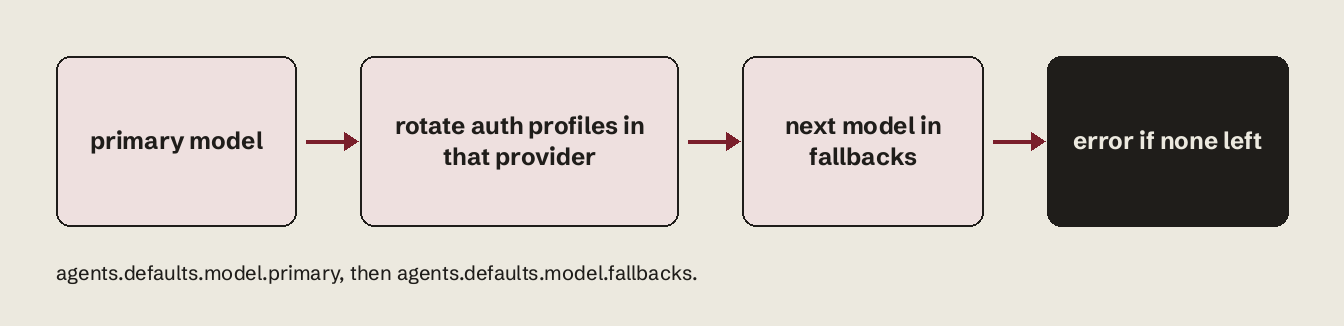
A cost-aware fallback chain runs cheap first and escalates: Terra as primary, Sonnet 5.5 as fallback, Opus 5.5 only by hand. We covered what a fallback chain costs during an outage separately. If you would rather not hand-maintain that chain, Vynaris is an OpenAI-compatible gateway at https://api.vynaris.com/v1 that you add to OpenClaw as a custom provider under models.providers; it routes each call by cost and prints a receipt with the price of every response.
Can I use a local model with OpenClaw?
Yes. OpenClaw bundles an Ollama provider: install Ollama, pull a model, and set ollama/<model> as your primary. vLLM, SGLang, LM Studio and llama.cpp also work through models.providers with a local base URL. Expect slower replies and more failed tool calls than hosted models, and give the model enough context for OpenClaw's scaffolding.
How to choose
- One model, no tuning: Claude Sonnet 5.5 or GPT-6.1 Sol.
- Cost first, still capable: GPT-6.1 Terra primary, Sonnet fallback.
- Long documents: Gemini 3.8 Flash, until its price doubles on 2027-01-01.
- Cheapest cloud: DeepSeek V4 Flash, scheduled off-peak.
- Utility model: Claude Haiku 5.5 or GPT-6 Luna.
- Private data: a local model through Ollama.
Don't route by price alone when a failed task has to be redone: one retry on Terra already costs as much as one clean run on Sonnet. Whatever you pick, keep prompt caching working; it cut every model's bill on our task by 69% to 80%.
FAQ
What model does OpenClaw use by default?
It depends on the provider you onboard. OpenAI's fresh setup defaults to openai/gpt-6-astra ($10 / $50 per 1M) and Google's to google/gemini-4-argon. Anthropic's example is anthropic/claude-opus-5-5. Check with openclaw models status.
Is Claude Opus worth it for OpenClaw?
Only for hard tasks. Opus 5.5 costs exactly 2x Sonnet 5.5 on our task ($0.467 vs $0.234 cached). Run Sonnet by default and switch to Opus with /model when Sonnet fails.
Why is my OpenClaw bill so high?
Because input dominates. Our 12-step task bills 402,600 input tokens for 7,200 output; output is 1.8% of the tokens. Broken caching, a large skills scaffold, or a premium default like GPT-6 Astra multiplies that.
Does OpenClaw support OpenRouter and other gateways?
Yes. OpenRouter, Vercel AI Gateway and others are bundled providers, and any OpenAI-compatible endpoint works through models.providers with a custom base URL.
Can I use different models for different tasks?
Yes. OpenClaw has separate keys for the primary model, fallbacks, utilityModel, imageModel and pdfModel, and per-agent overrides under agents.entries.
Will these prices change?
Two are already scheduled to: Gemini 4 Argon doubles on 2026-12-01 and Gemini 3.8 Flash on 2027-01-01. Current rates for every model are on our models page.